How to buy a peace lily that is not already struggling.
Pick the plant with firm leaves, clean undersides, evenly moist soil, no sour smell, no pests, and a pot that drains.
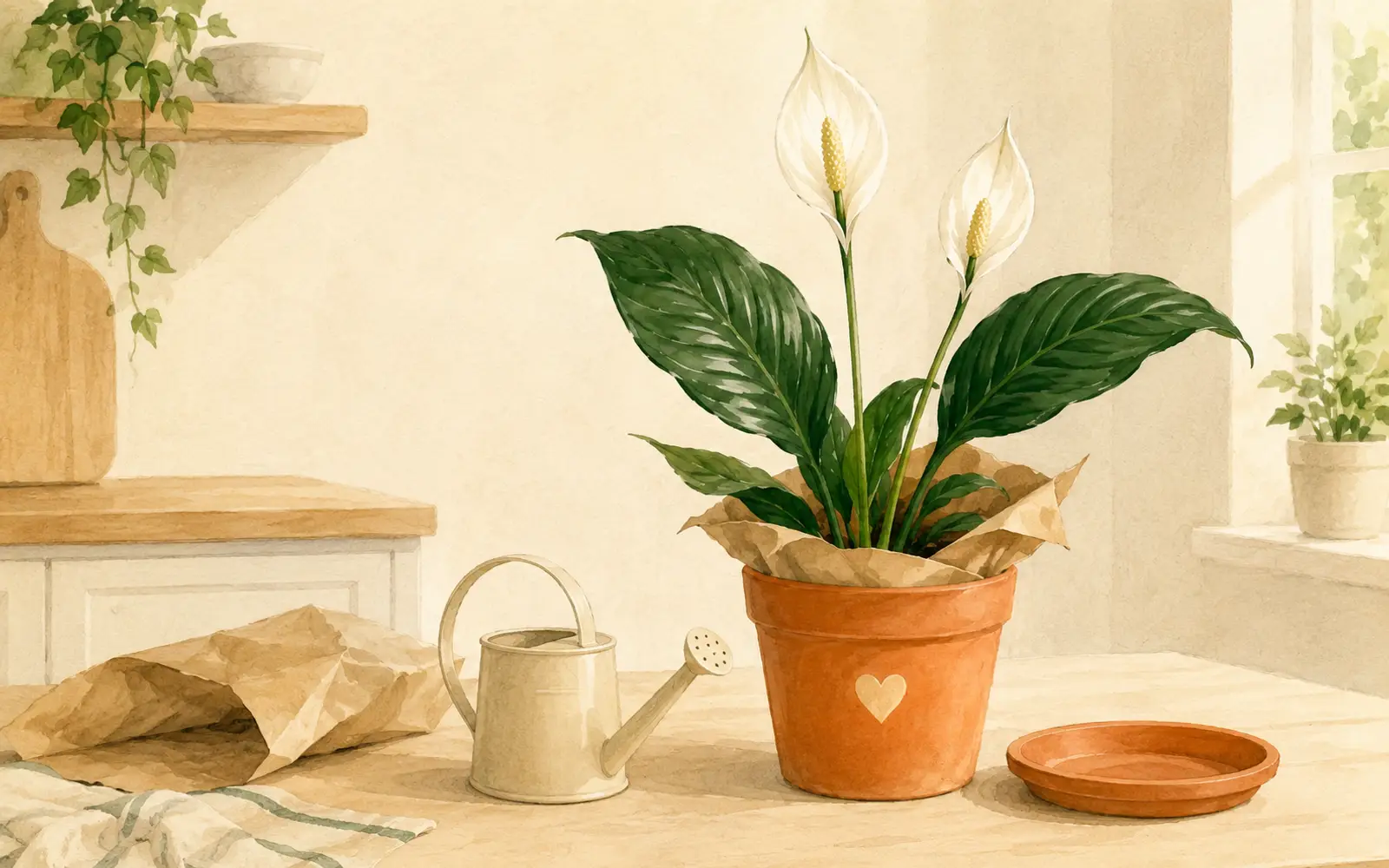
Buying checklist
- Best leaves
- Firm, glossy, evenly green leaves with no widespread yellowing or black mushy tissue.
- Check pests
- Look under leaves, in leaf joints, and on the soil surface before buying.
- Check soil
- Moist is fine; soggy, sour, or fungus-gnat soil is a warning.
- First week
- Quarantine, observe, and do not repot unless the plant truly needs it.
Start with the whole plant shape
A good peace lily should look full, balanced, and firm. A few older lower leaves are not a dealbreaker, but widespread yellowing, limp stems, collapsed leaves, or blackened tissue are warning signs. Choose the plant that looks steady, not just the one with the biggest flower.
Blooms are nice, but leaves tell you more about future health. A plant with glossy leaves and no flowers is often a better buy than a flowering plant with soggy soil and damaged foliage.
Inspect leaves before you fall in love
Look at the top and underside of several leaves. Check for stippling, sticky residue, cottony white clusters, webbing, brown spreading spots, or leaf edges that look scorched. Minor cosmetic tip browning is common, but a pattern across many leaves means the plant has already been stressed.
Variegated cultivars such as 'Domino' and 'Picasso' naturally have white patterning, so do not confuse variegation with disease. Variegation should look integrated into the leaf, not fuzzy, wet, sunken, or spreading from a wound.
Check the crown and soil surface
The crown is where leaves emerge from the base. It should feel firm and look clean. Avoid plants with mushy bases, sour smell, algae-heavy soil, or small black flies lifting from the pot when you move it. Fungus gnats are common in retail environments, but you do not need to bring them home if you have a choice.
If the pot is wrapped in decorative foil, lift it if allowed and check for standing water. Foil sleeves trap water around nursery pots and can turn an otherwise healthy plant into a soggy one.
A discounted peace lily with wet soil, yellow leaves, and pests is not a bargain for a new owner. It is a rescue case. Start with a healthy plant if you want the first month to be easy.
Peek at the roots if possible
If the store or seller allows it, gently slide the nursery pot just enough to see the root edge. Healthy roots are usually pale to tan and firm. A few circling roots are normal. Avoid plants with black mushy roots, a rotten smell, or a root ball so dense that water cannot enter.
Do not tear apart a plant in the store. This is a quick inspection, not a repotting session.
Choose the right size for your room
Peace lilies range from compact tabletop plants to large floor plants such as 'Sensation'. Buy for the space you actually have. A large cultivar in a narrow hallway will get bumped, dry unevenly, and collect dust faster. A compact plant is easier for a shelf, desk, or first-time owner.
If you have pets or children, size also affects placement. A small plant can go on a high stable shelf. A large floor plant may be harder to keep out of reach.
Online buying checks
For online plants, look for clear photos of the exact plant or a realistic example, not only a perfect stock image. Check whether the plant ships in a nursery pot with drainage, how it is packed for cold or heat, and whether the seller has a policy for shipping damage.
Do not order during extreme weather unless the seller offers appropriate heat or cold protection. Peace lilies dislike chilling, and a beautiful plant can arrive damaged after a cold transit route.
First week after buying
- Keep it separate. Quarantine from other plants while you inspect for pests.
- Check soil before watering. Retail plants are often already wet.
- Choose bright indirect light. Do not put it straight into sun.
- Wait on fertilizer. Let the plant adjust first.
- Repot only if needed. Soggy bad soil, no drainage, or severe root binding can justify it; otherwise wait.
Best beginner choice
For most people, a medium classic green peace lily is the easiest start. It is large enough to read its signals but not so large that watering becomes awkward. Variegated cultivars are beautiful, but they may need brighter light to look their best and may show cosmetic damage more obviously.
Sources & further reading
- UF/IFAS Gardening Solutions — Peace Lily size, indoor care, and division notes.
- NC State Extension Gardener Plant Toolbox — Spathiphyllum pest, light, and care notes.
- ASPCA Animal Poison Control Center — Spathiphyllum pet toxicity guidance.