Are peace lilies poisonous to children?
Peace lilies can irritate the mouth and throat if chewed. For a baby or child exposure, remove plant pieces, rinse the mouth, and contact Poison Control for case-specific advice.
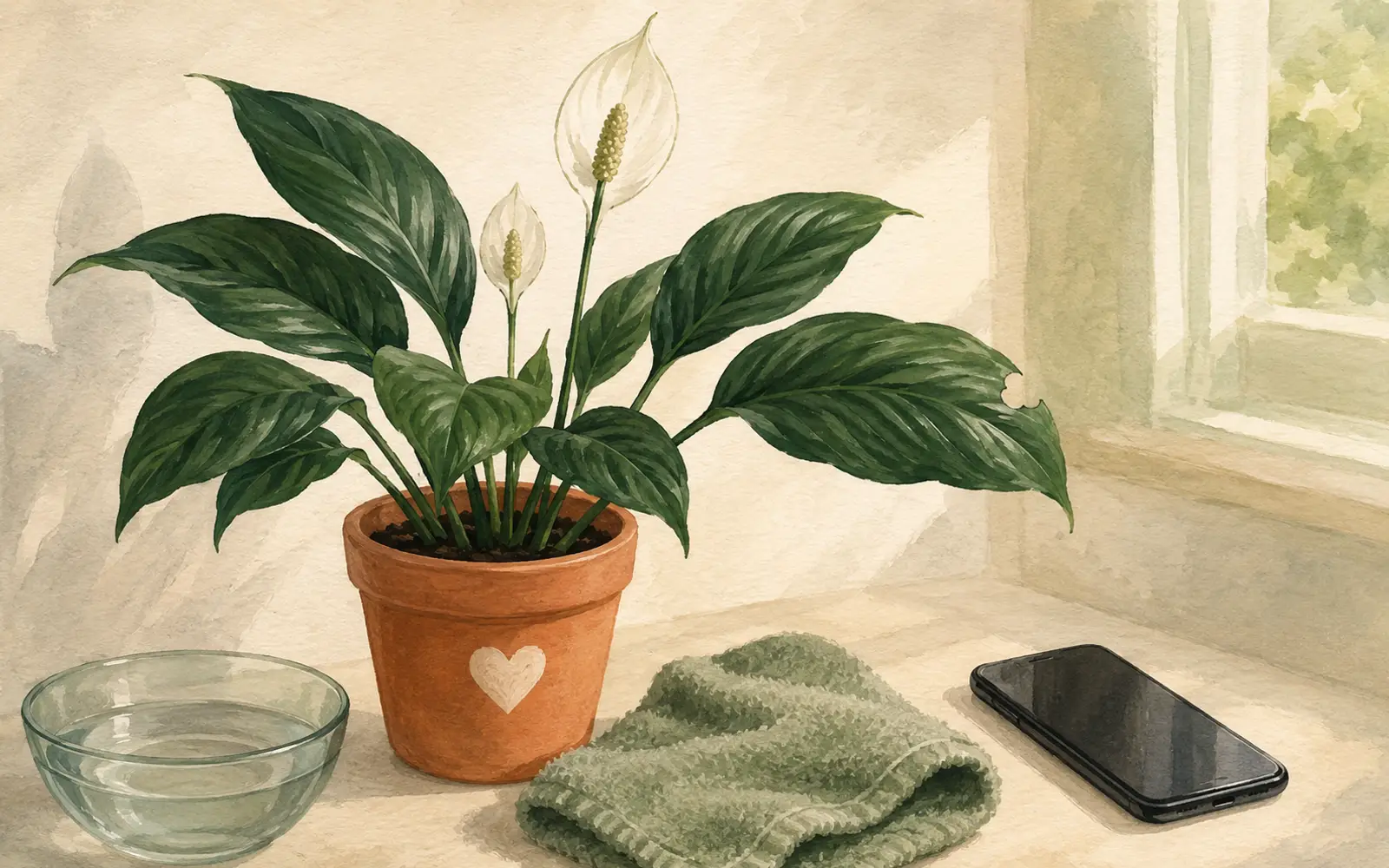
Child safety
- Toxic principle
- Insoluble calcium oxalate crystals in leaves, stems, and flowers.
- Typical symptoms
- Mouth pain, burning, drooling, throat irritation, nausea, or vomiting.
- First step
- Remove plant pieces and rinse the mouth if the child can do so safely.
- Get help
- Use webPOISONCONTROL or call Poison Control at 1-800-222-1222 in the US.
What peace lily exposure does
Peace lilies are not edible houseplants. The leaves, stems, and flowers contain insoluble calcium oxalate crystals. Poison Control describes these crystals as irritating to the mouth and throat when the plant is chewed or swallowed.
That irritation is usually felt quickly. A child may spit out the plant, cry, drool, complain of mouth pain, or refuse food and drink. The plant does not need to be swallowed in large amounts to cause discomfort, because chewing releases the irritating crystals.
For babies, toddlers, uncertain amounts, breathing trouble, swelling, repeated vomiting, or any worrying symptoms, contact Poison Control or emergency medical help right away.
First steps after a bite
- Move the plant away. Prevent another bite while you assess.
- Remove visible plant pieces. Do this gently if you can see them.
- Rinse the mouth. If the child is old enough to rinse and spit safely, use water.
- Do not force vomiting. Do not give home treatments unless Poison Control or a clinician tells you to.
- Get case-specific advice. Use webPOISONCONTROL or call 1-800-222-1222 in the US.
Symptoms to watch
- Burning or pain in the mouth.
- Drooling or spitting.
- Swelling of lips, tongue, or throat.
- Difficulty swallowing.
- Nausea or vomiting.
- Coughing, breathing trouble, or unusual sleepiness.
Severe symptoms are not something to monitor casually at home. If breathing, swelling, repeated vomiting, or swallowing trouble is involved, seek urgent advice.
Babies and toddlers need extra caution
Babies and toddlers explore with their mouths, cannot explain symptoms clearly, and may chew more than an adult expects. Put peace lilies out of reach, not just "nearby but supervised." A floor plant is easy to reach. A low plant stand is easy to pull over.
Use a stable high shelf, a room the child does not access, or choose a different plant until the child is older. If the plant is large and cannot be placed safely, it may not belong in the main play area.
Skin contact and sap
Some people may get skin irritation from plant sap. If sap gets on skin, wash with soap and water. If it gets near eyes, rinse and seek medical advice if irritation continues. Wear gloves if you are pruning, dividing, or cleaning up broken stems and you know your skin is sensitive.
Teach plant rules early
Even if a peace lily is kept out of reach, children should learn that houseplants are not food. This matters because homes often contain several plants with different risk levels. A simple rule works best: look, but do not pick or taste leaves.
If you are not sure it was a peace lily
Take photos of the whole plant, leaves, flowers, pot label, and chewed pieces. Common names can be confusing, and some plants with "lily" in the name have very different safety concerns. Identification helps Poison Control or a clinician give better advice.
Placement for homes with kids and pets
Choose placement that solves both child and pet access. A high shelf must be stable and not reachable by climbing furniture. A hanging planter must not drip onto reachable surfaces. A closed plant room works only if doors actually stay closed.
Sources & further reading
- Poison Control — peace lily exposure and calcium oxalate irritation guidance.
- NC State Extension Gardener Plant Toolbox — Spathiphyllum toxicity notes.
- ASPCA Animal Poison Control Center — insoluble calcium oxalate plant guidance for household context.